

The agricultural use of meadows and pastures depends on their so-called feed value. The feed value indicates how nutritious and suitable a plant (e.g., grass or clover) is for grazing animals. The right time to cut is crucial for a good feed value: hay cut early has a higher nutritional value. Fertilization is done organically with manure or slurry, ideally in the spring and after the first cut. Moderate fertilization promotes grass growth on pastures. Weeds such as sorrel and thistles would reduce yield and displace valuable fodder plants. They are controlled through maintenance, reseeding, and targeted grazing.
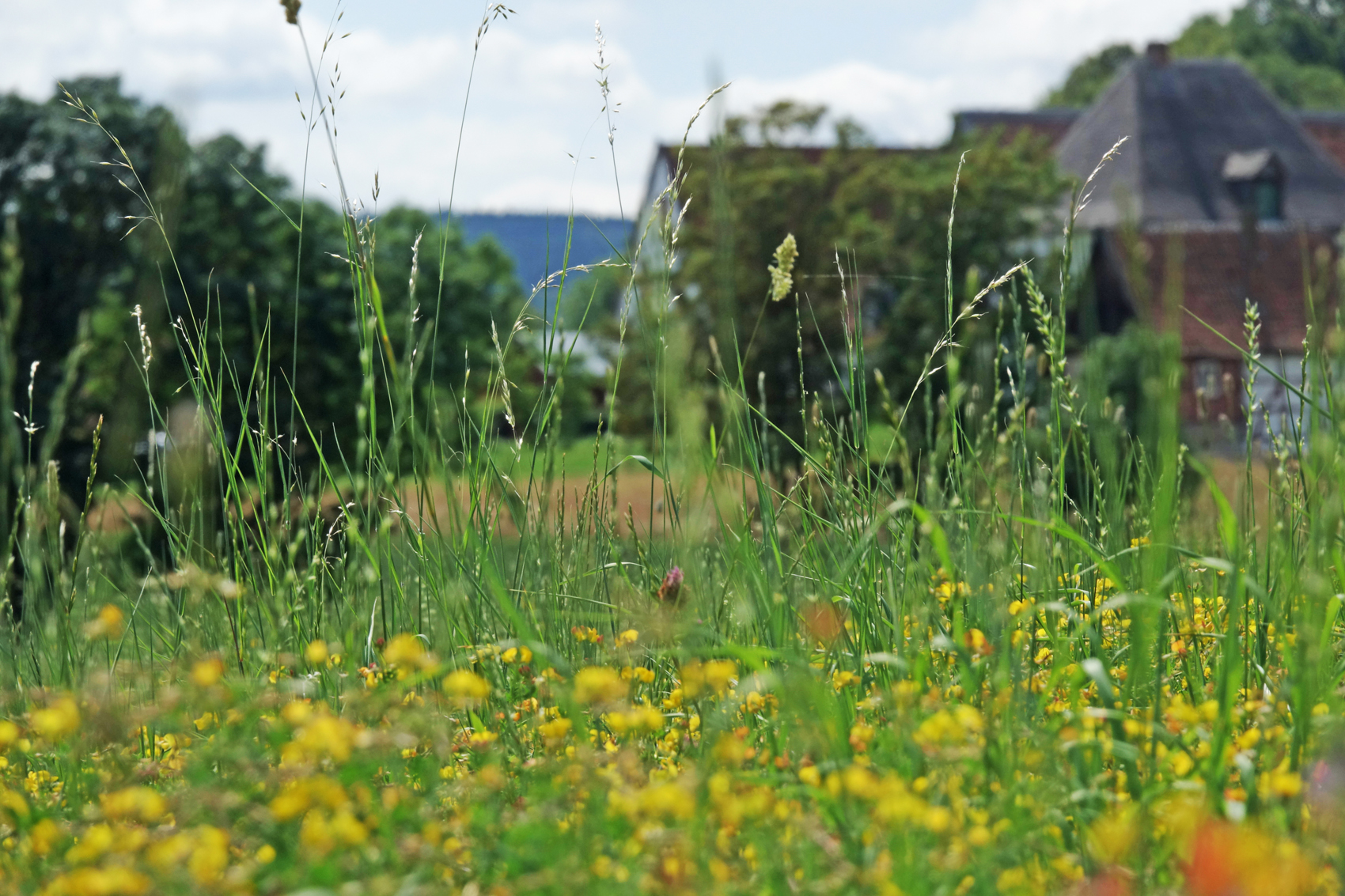
Grassland is a valuable habitat for many animal and plant species, especially insects such as butterflies, grasshoppers, and wild bees. Appropriate maintenance is crucial for biodiversity: mowing the areas late in the season allows flowering plants to remain intact for longer and protects breeding sites. Unmowed areas provide refuge and wintering opportunities for animals. Overuse, frequent mowing, or excessive fertilization endanger diversity. In nature conservation, species-rich grassland is therefore of central importance for the preservation of biodiversity.