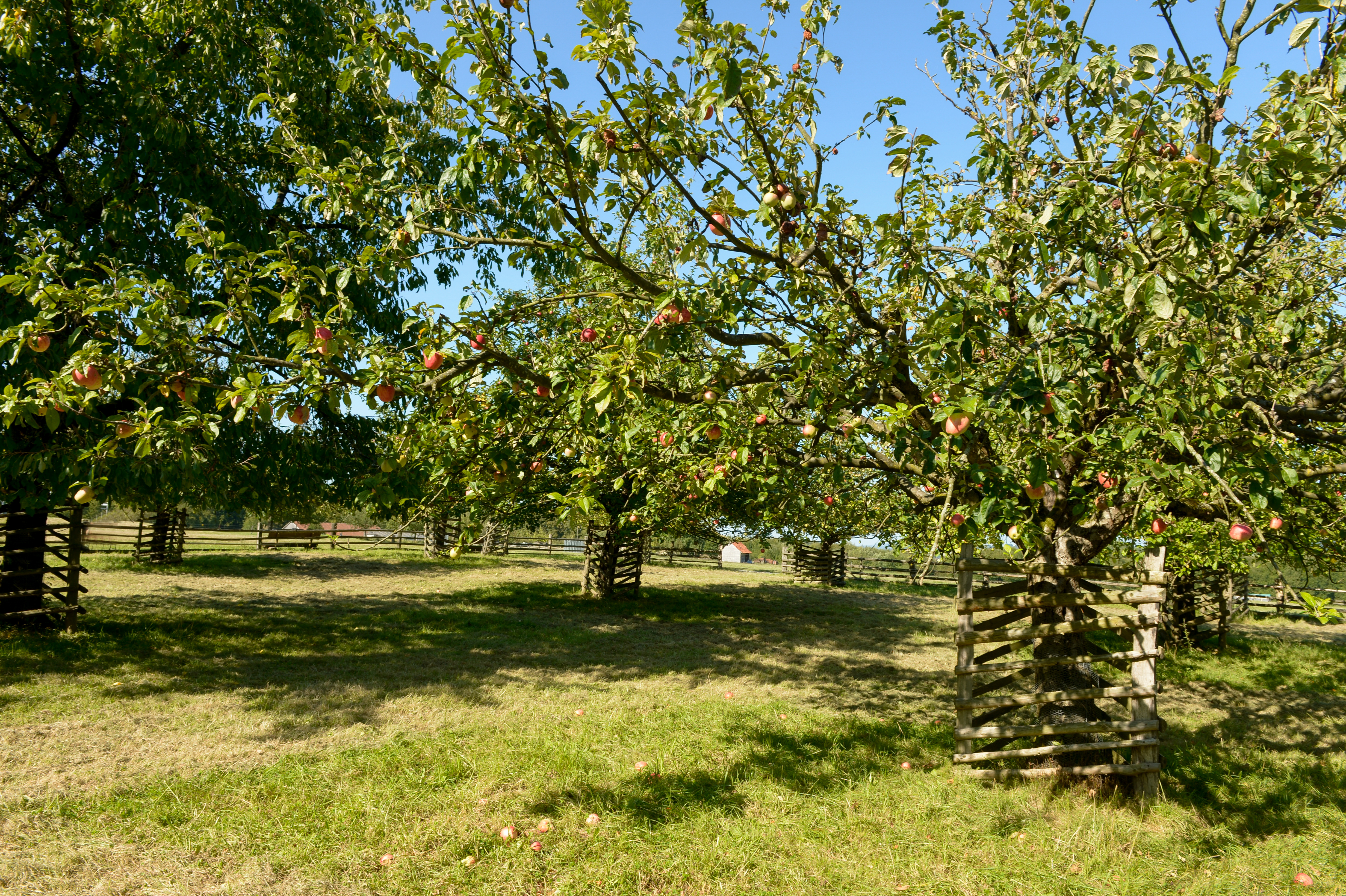
Traditional meadow orchards (Streuobstwiesen) are species-rich cultivated landscapes with high-stemmed fruit trees such as apple, pear, and cherry. They combine traditional fruit growing with great ecological diversity. The museum has created meadow orchards and fruit farms with old varieties. Historically, the area under the trees was often used as pasture – a dual use that combined fruit growing and livestock farming. The combination of extensive maintenance and fruit growing of old varieties makes meadow orchards particularly valuable, both ecologically and culturally.





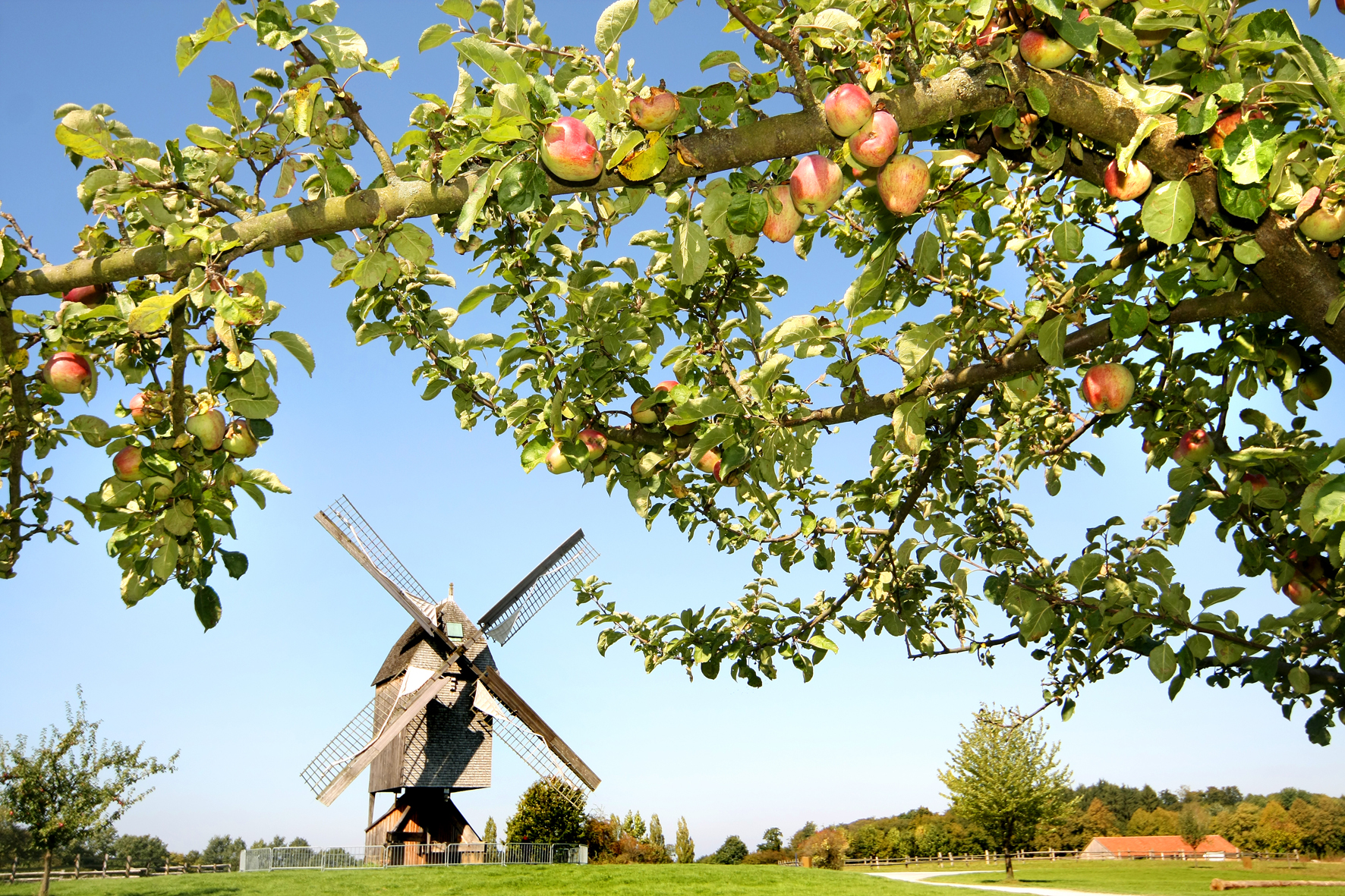
Roadside fruit growing in Westphalia began in the 19th century to beautify avenues and supply the population. Fruit trees – mostly apple, pear, or cherry – were planted along paths and roads. They provided free fruit for everyone and were part of public welfare. This form of cultivation shaped the cultural landscape and promoted biodiversity. Many of these old trees are now rare varieties. Roadside fruit growing can be seen in several places in the museum, for example along the path from the Armenhaus (house for the poor) in Rinkerode to the Westhellweghof.