The earliest time section was chosen for the large individual farms from the Osnabrück, Minden, Münsterland, and Lippe regions (around 1800). A slightly later time section was chosen for the Westmünsterland farm and the Westhellweg farm (around 1860). Some of the farms show the original form of the hall house (no structural separation between the living area and stable section of the building) and can also be described as “smokehouses”: the hearth fire is open and without a chimney in the room, and the smoke drifts freely through the building. However, farms with chimney flues and structurally separate areas for humans and animals can also be found from the same period.



The museum’s Paderborn village (Paderborner Dorf) currently consists of around 40 buildings. It provides an example of everyday life in a large village in eastern Westphalia around 1900. Most of the buildings in the village were constructed much earlier and had undergone numerous changes by 1900, such as the particularly magnificent Valepagenhof, built in 1577, after its renovation in 1860. In addition to large farms, the village also features craftsmen’s houses and workshops, apartment buildings, and so-called “Armeleutehäuser,” literally meaning houses for the poor. The village is laid out around a central church square and cemetery. However, these two defining elements of the village are currently still missing from the museum grounds.



The period in which the Sauerland farmstead group (Sauerländer Dorf) is depicted is evident at first glance on the village street: a power line stretches between two large farmsteads and a transformer tower signals the dawn of the electric age. In the main house of the Kayser-Henke farmstead, a light bulb illuminates the hallway and corridor. In the living room, an electric iron can already be operated under artificial lighting. The bakery, originally built in 1736, is still standing in 1920. However, it has already been converted into a tool shed. The so-called “Remise”, a shed for farm equipment and horse-drawn carriages, illustrates the phase in which the rapid modernization of agriculture began.


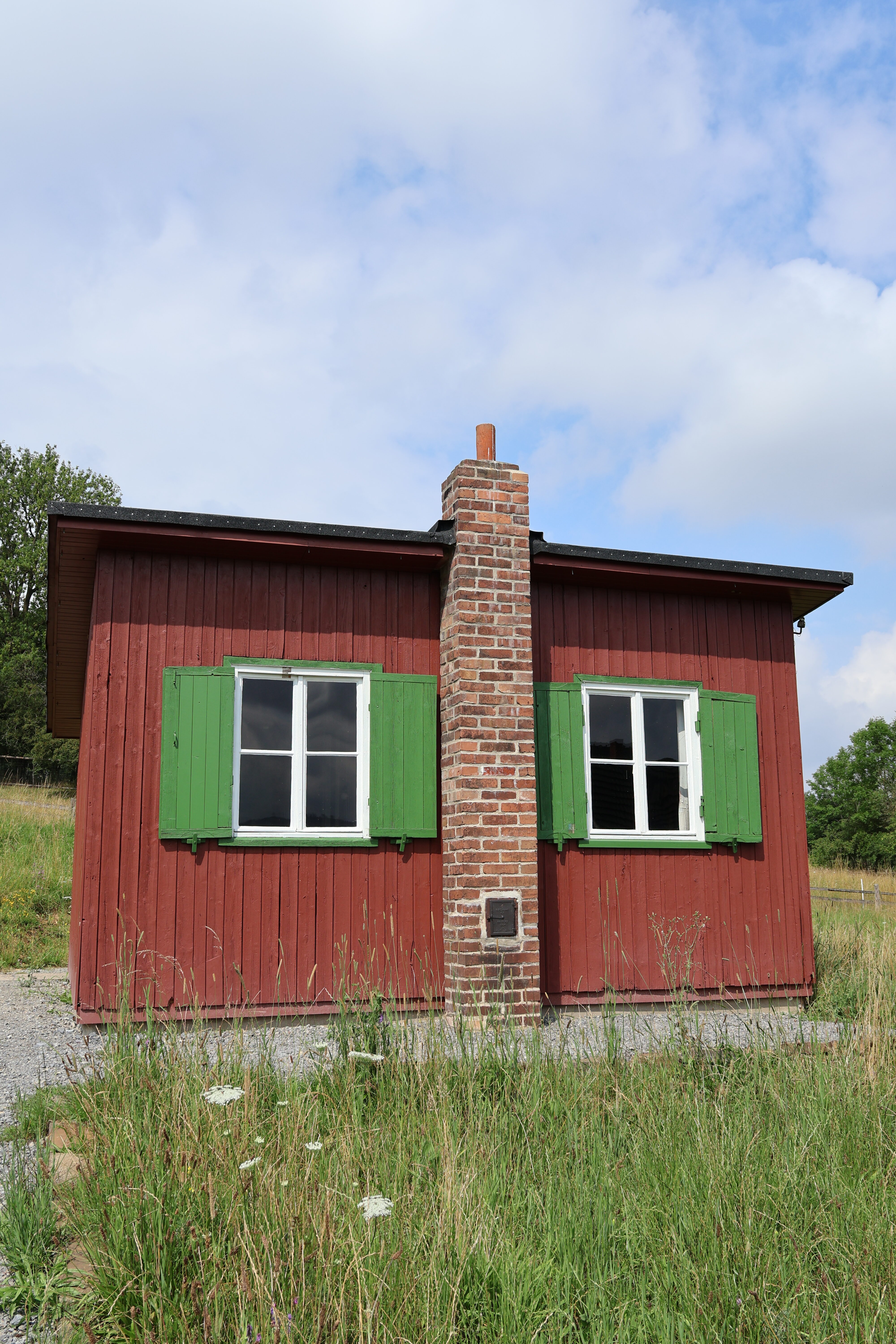

The Siegerland hamlet (Siegerländer Weiler) is still under construction. It is the building group that is currently depicted in the museum’s most recent time section. The Stöcker house, furnished in its 1960s state, differs from most of the other buildings in the museum not only in that it displays the first (and so far only) television set in the exhibition. During its furnishing, extensive interviews were conducted with former residents of the house, who can be seen and heard in a building for the first time. With the Siegerland hamlet, the museum enters the post-war era, to which many visitors have their own memories.