
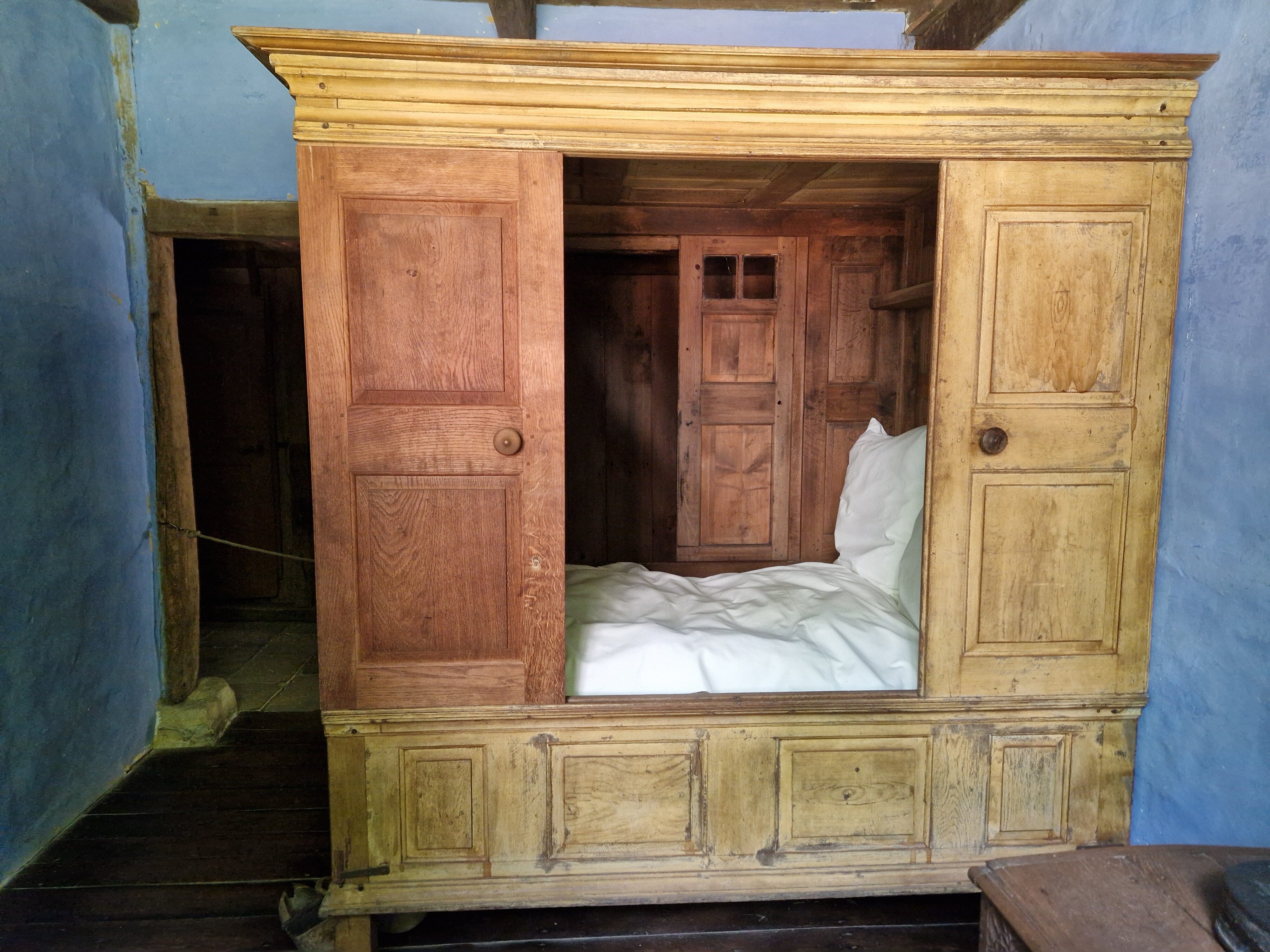
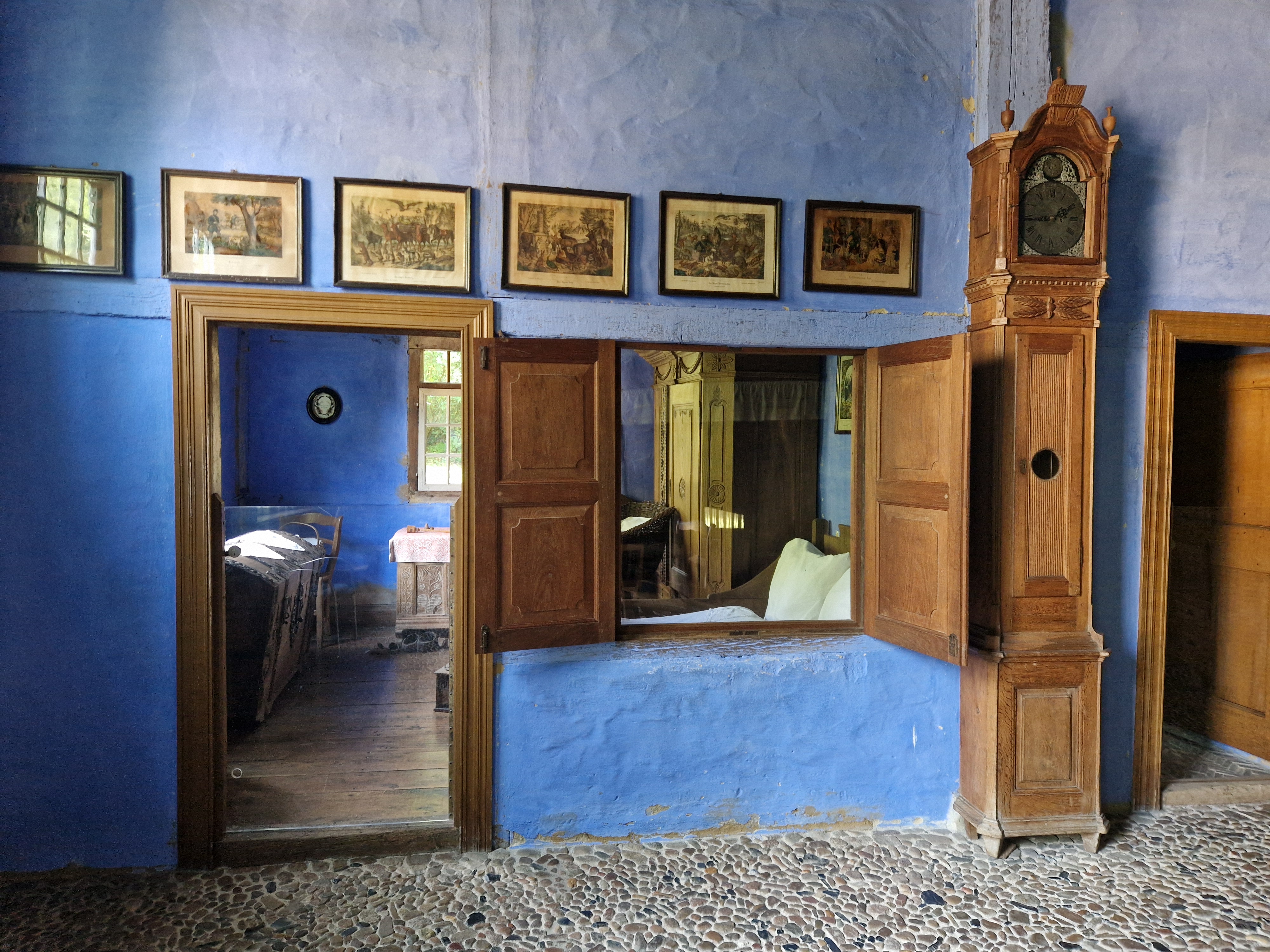
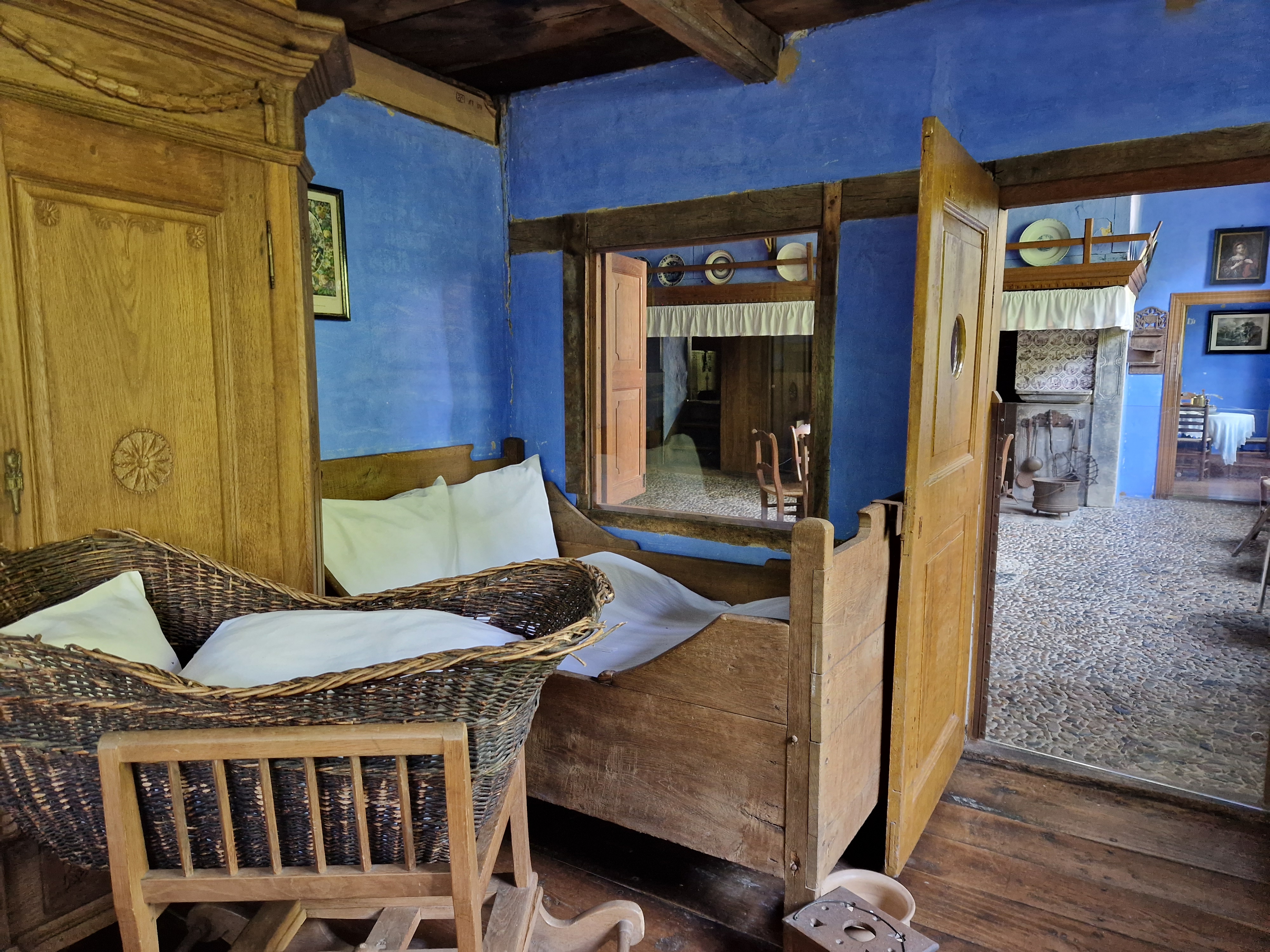
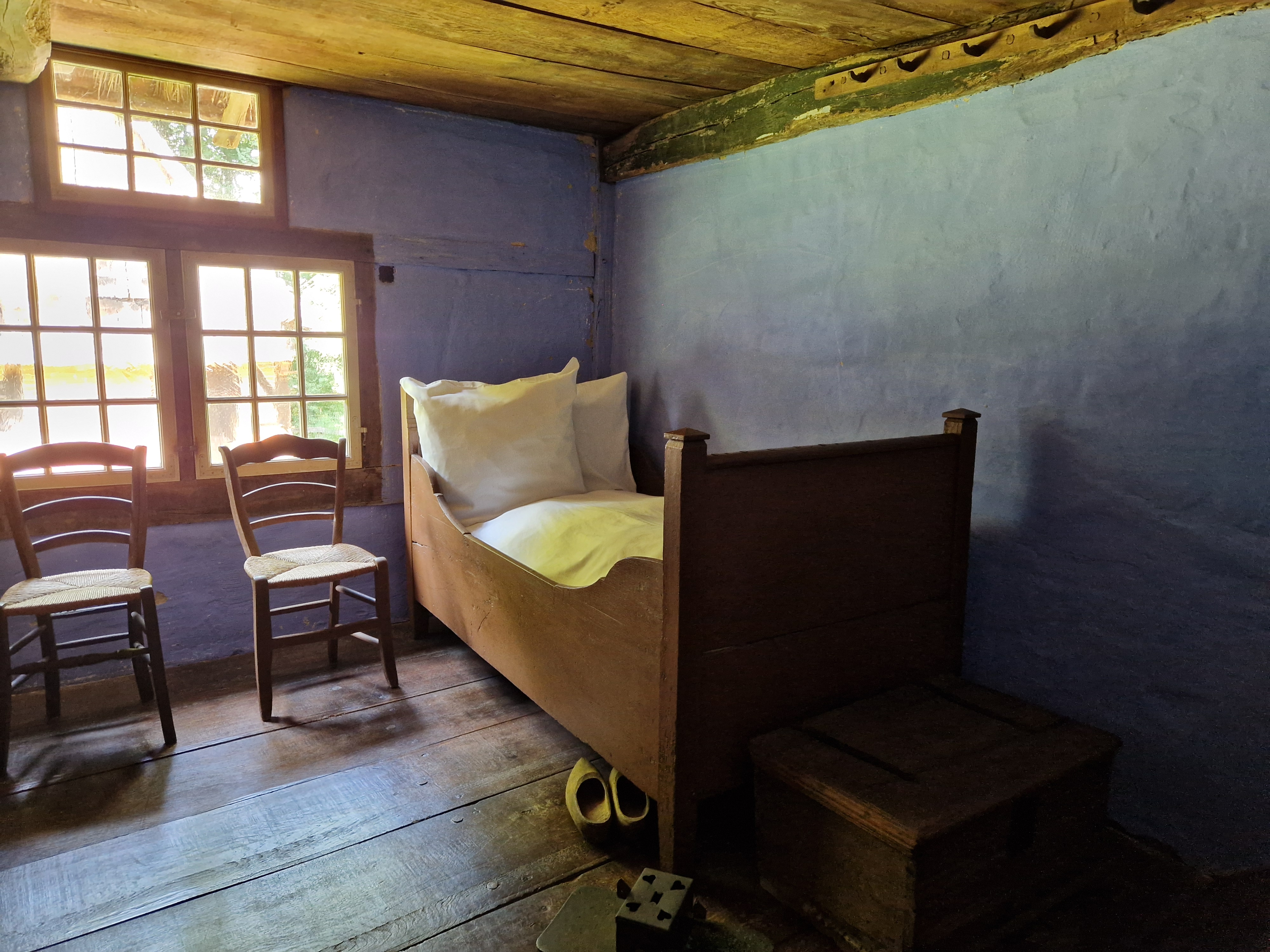
The farmhouse’s furnishings are typical of the Westmünsterland region around 1860. Several rooms lead off from the large kitchen, separated from the stable area by a wooden wall. The grandparents may have slept in the bed box, or “alcove”, with its adjoining small living area. Maids or older daughters slept in the upper chamber. The parents’ bedroom is furnished with a wardrobe and chest and is heated by the window opening to the large central living room (Diele). Even though life was characterized by work, and – especially in winter – by darkness and cold, the layout of the rooms and separate beds provided small private retreats.


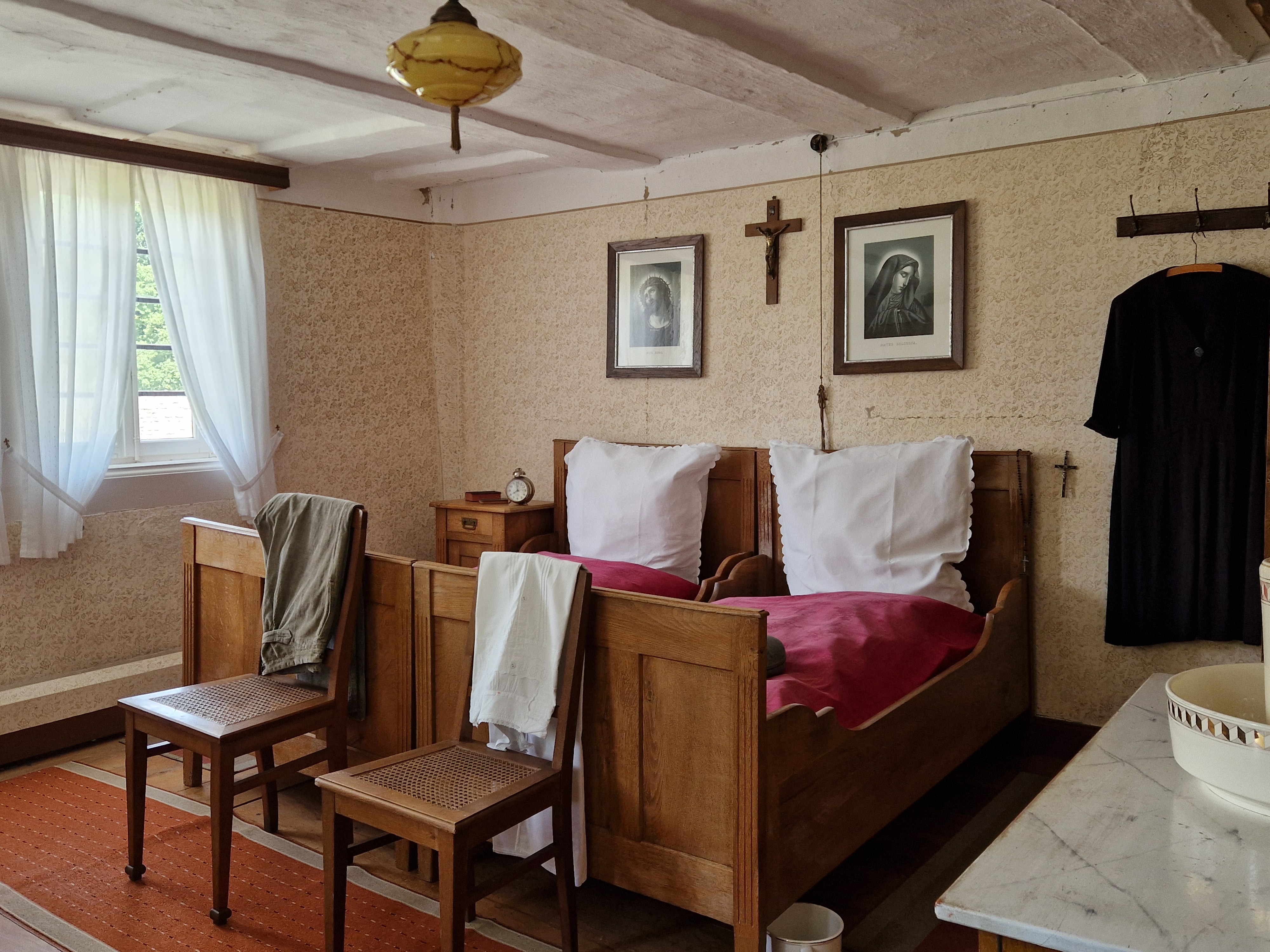
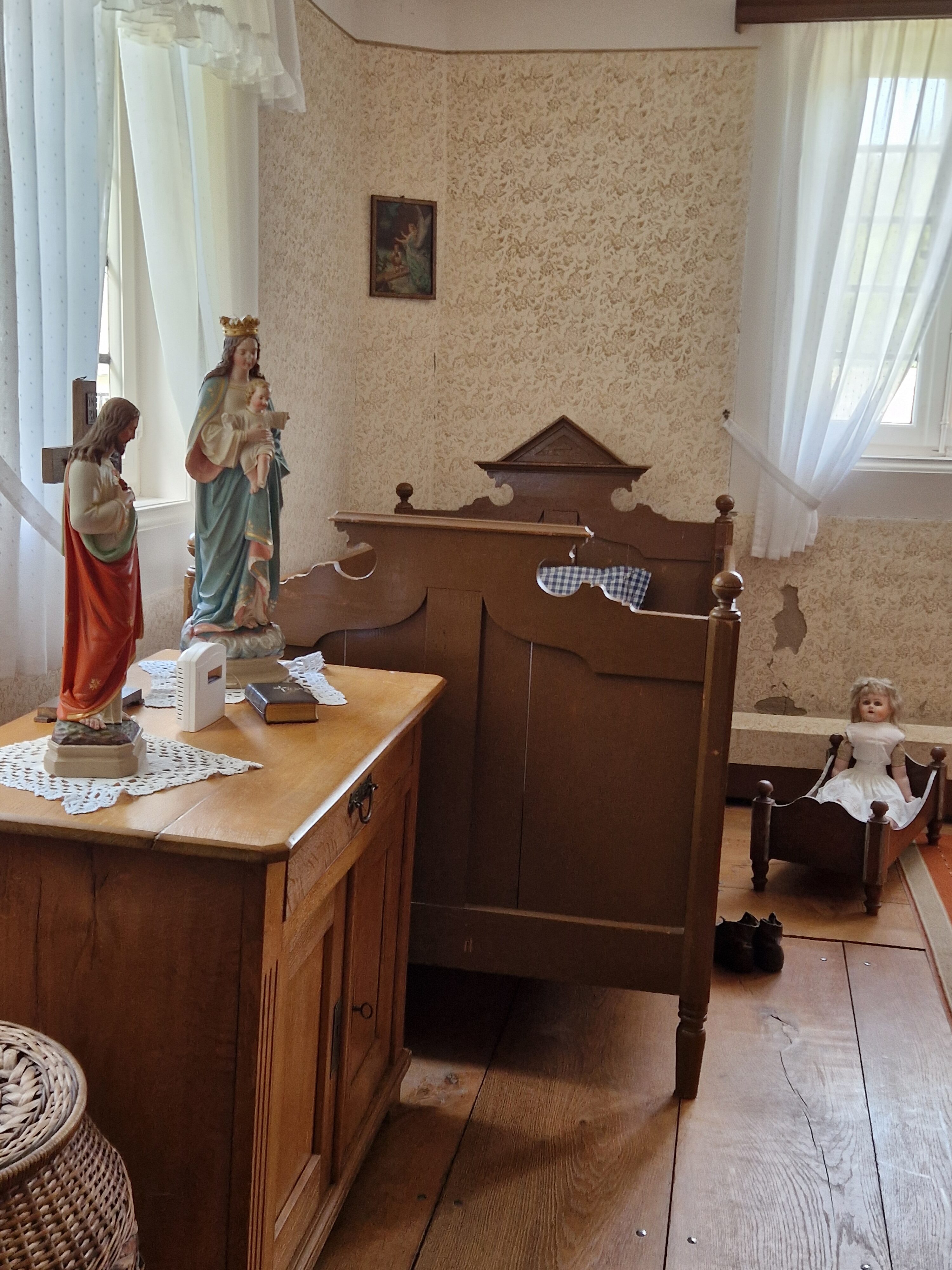
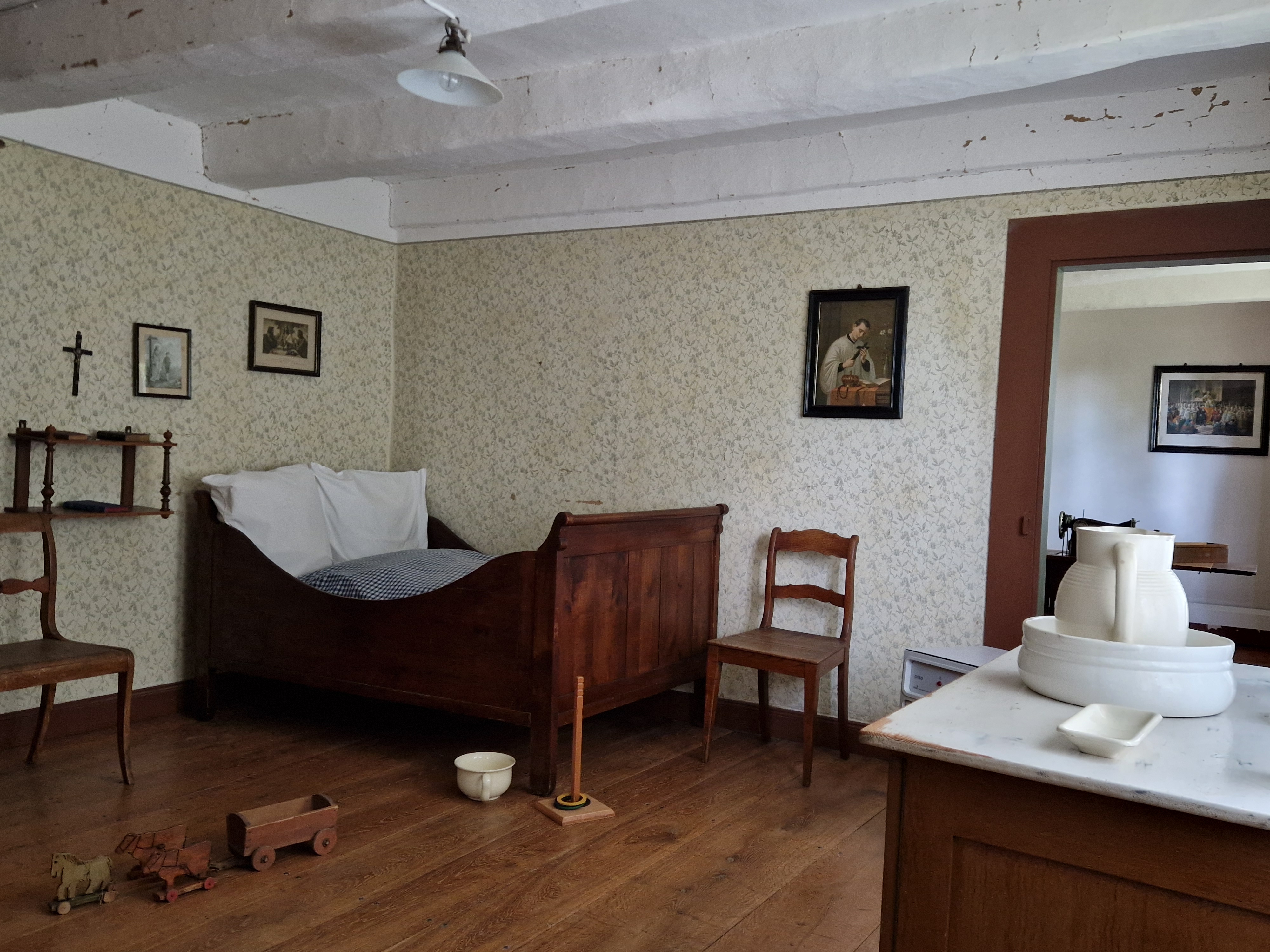
In 1925, the farm had running water and electricity. Electrification also brought about major changes in Westphalia. Bedtimes shifted, as manual tasks and household chores could now be done in the evening hours.
The bedrooms of the family members were located on the upper floor, somewhat separated from the farm activities. The furnishings of the parents’ bedroom from 1911, a wedding gift, were used for decades. The youngest child slept with the parents, while the older children shared a children’s room. The unmarried aunt shared another bedroom with the maid.

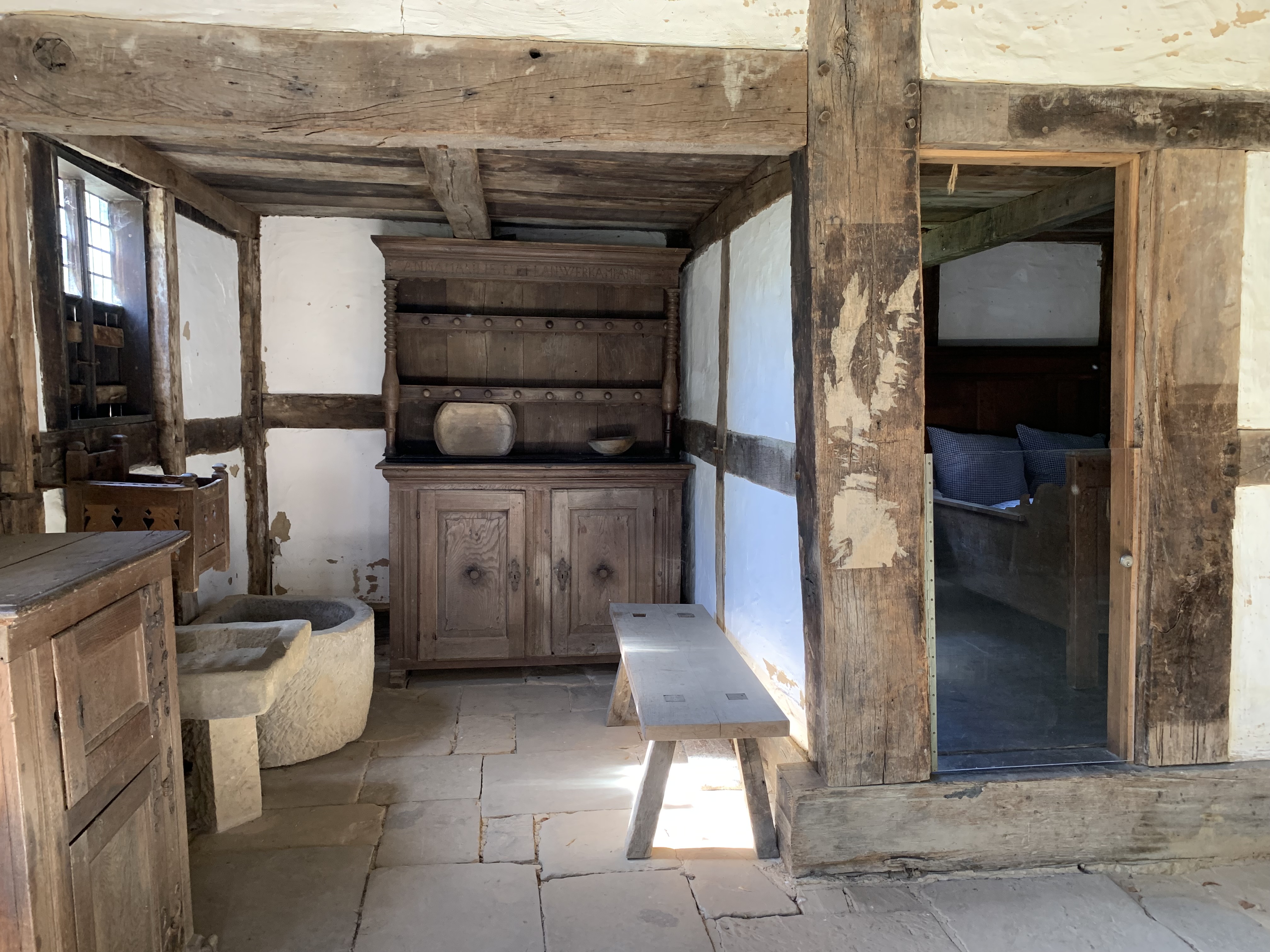
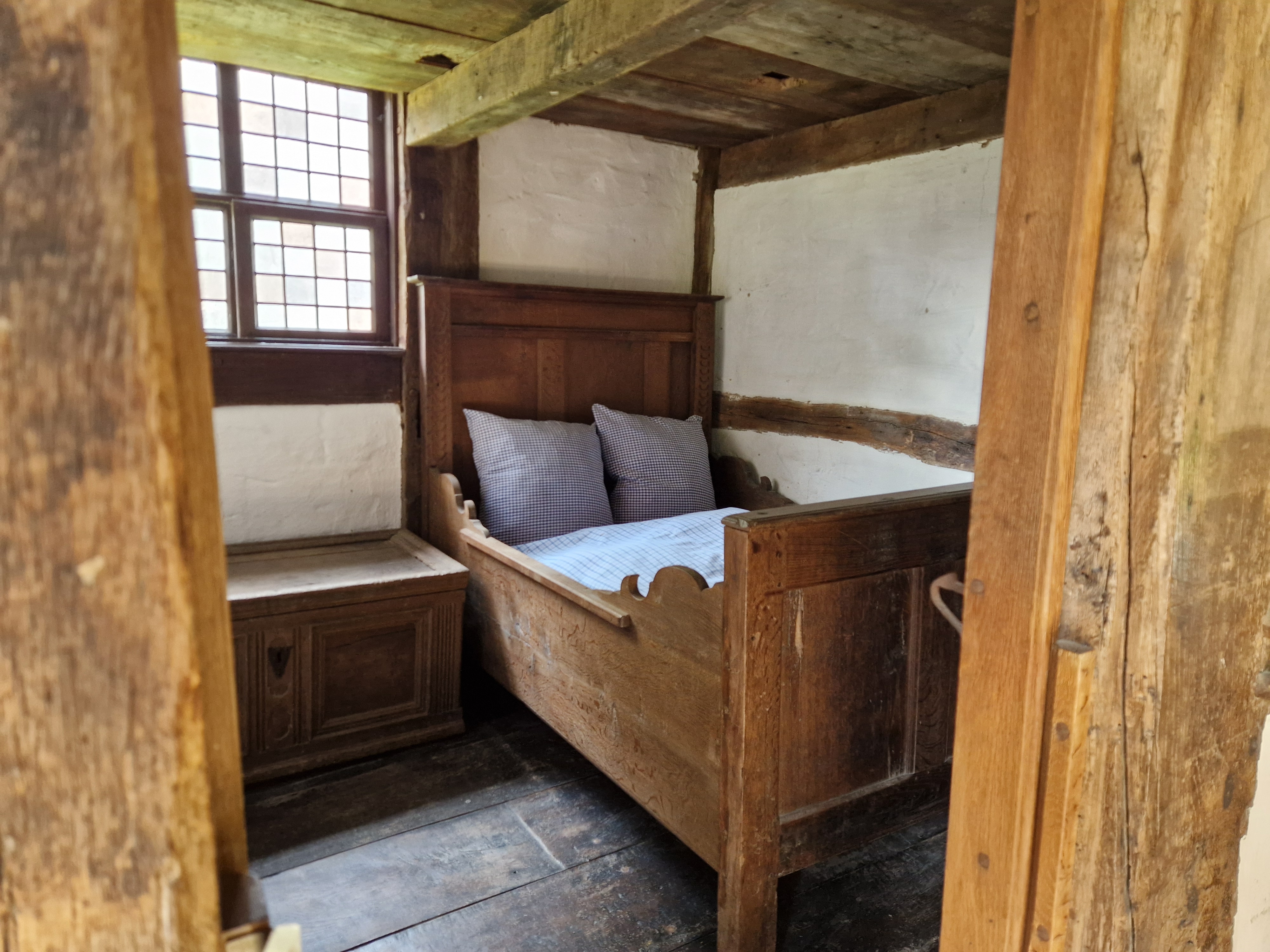
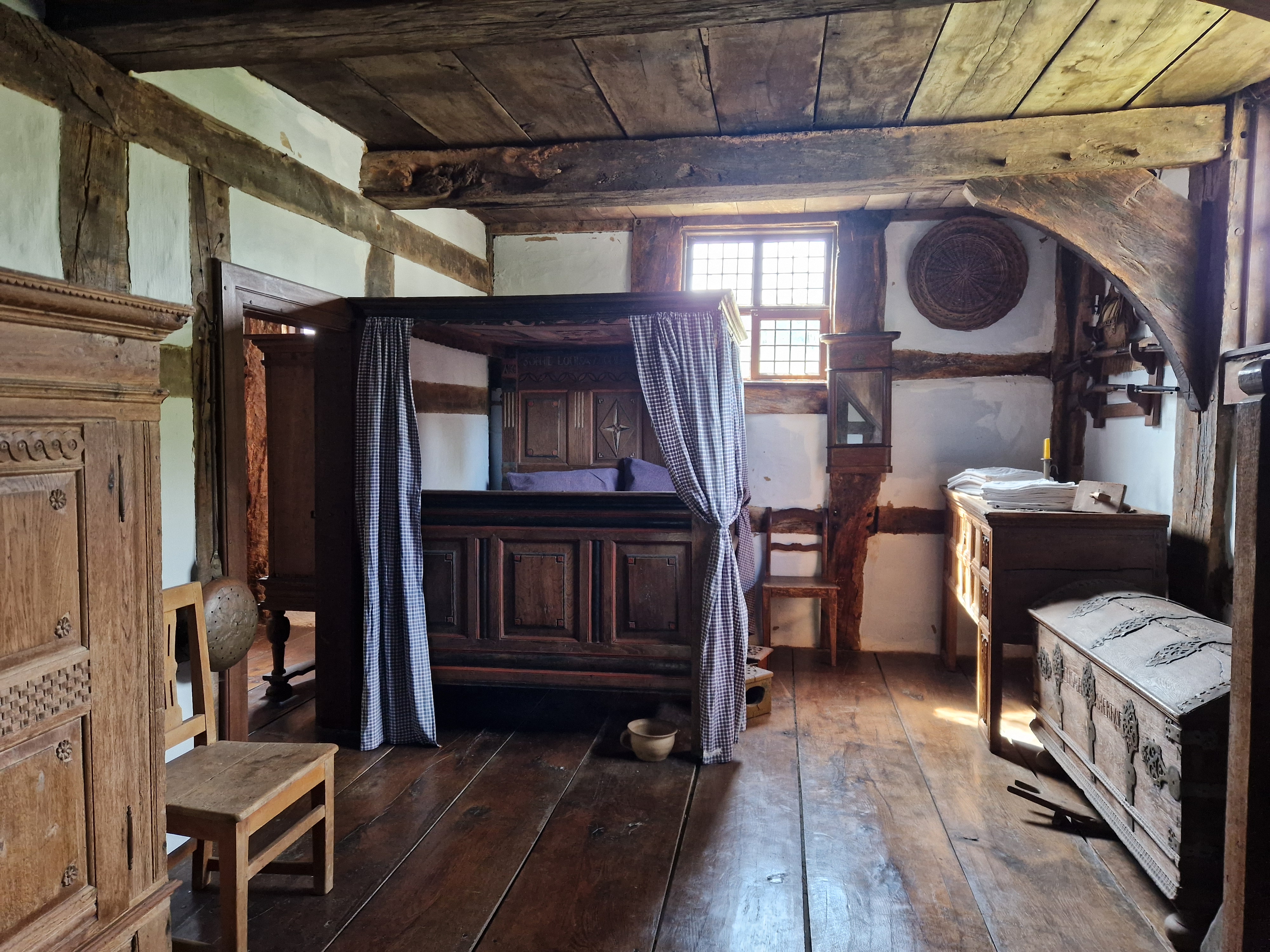
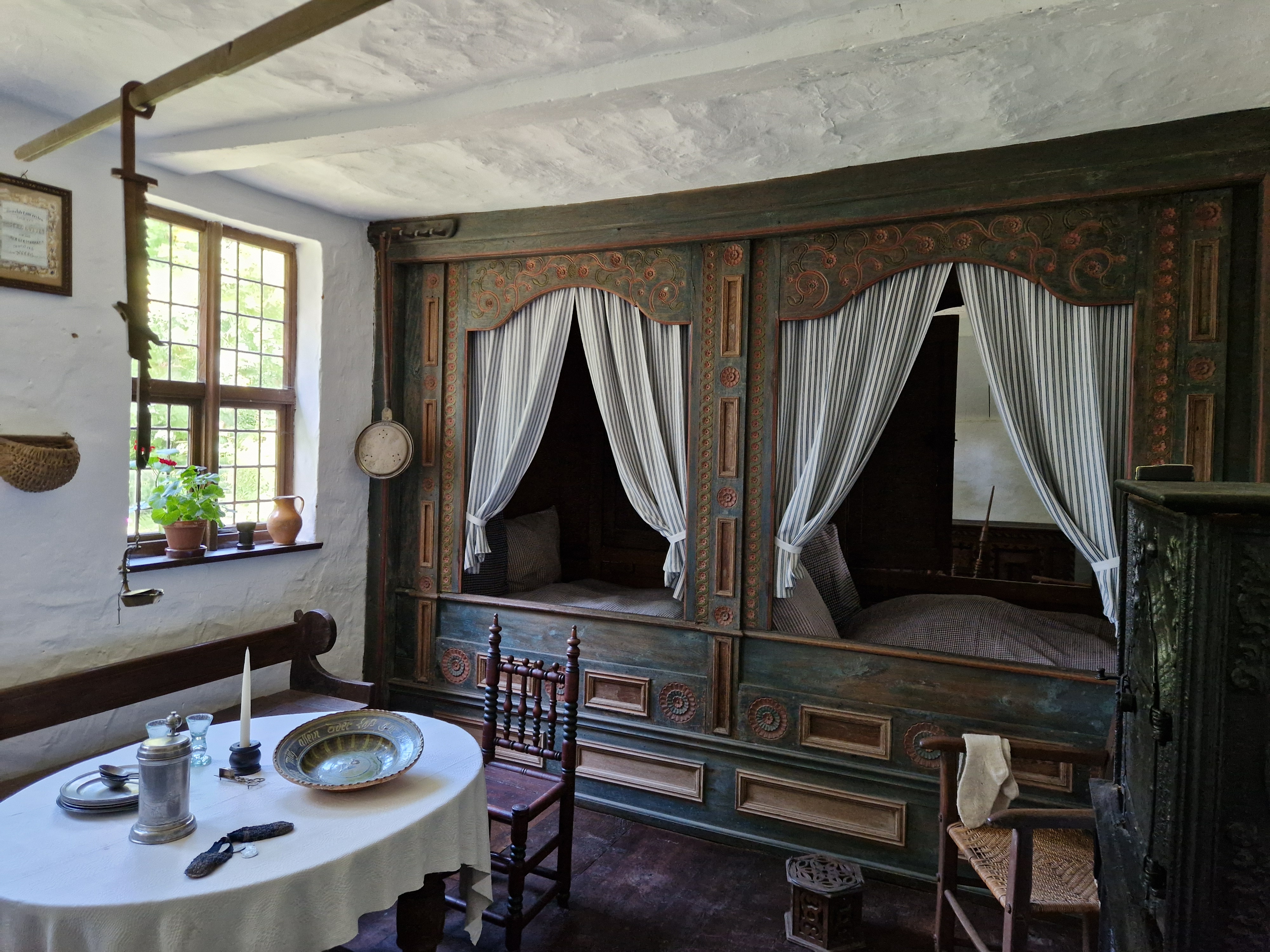
The so-called Leibzucht (retirement cottage) of the Lippe Meier farm was inhabited by the old farmers around 1800. It was customary for them to be granted the right to live on the farm, and this was laid down in writing in the inheritance regulations. They often still ran a small farm with one or two cows. The living room and bedroom were located in the side aisle of the hallway (Diele) and were unheated. The mattresses were made of rye straw and the duvets were filled with goose feathers.
