
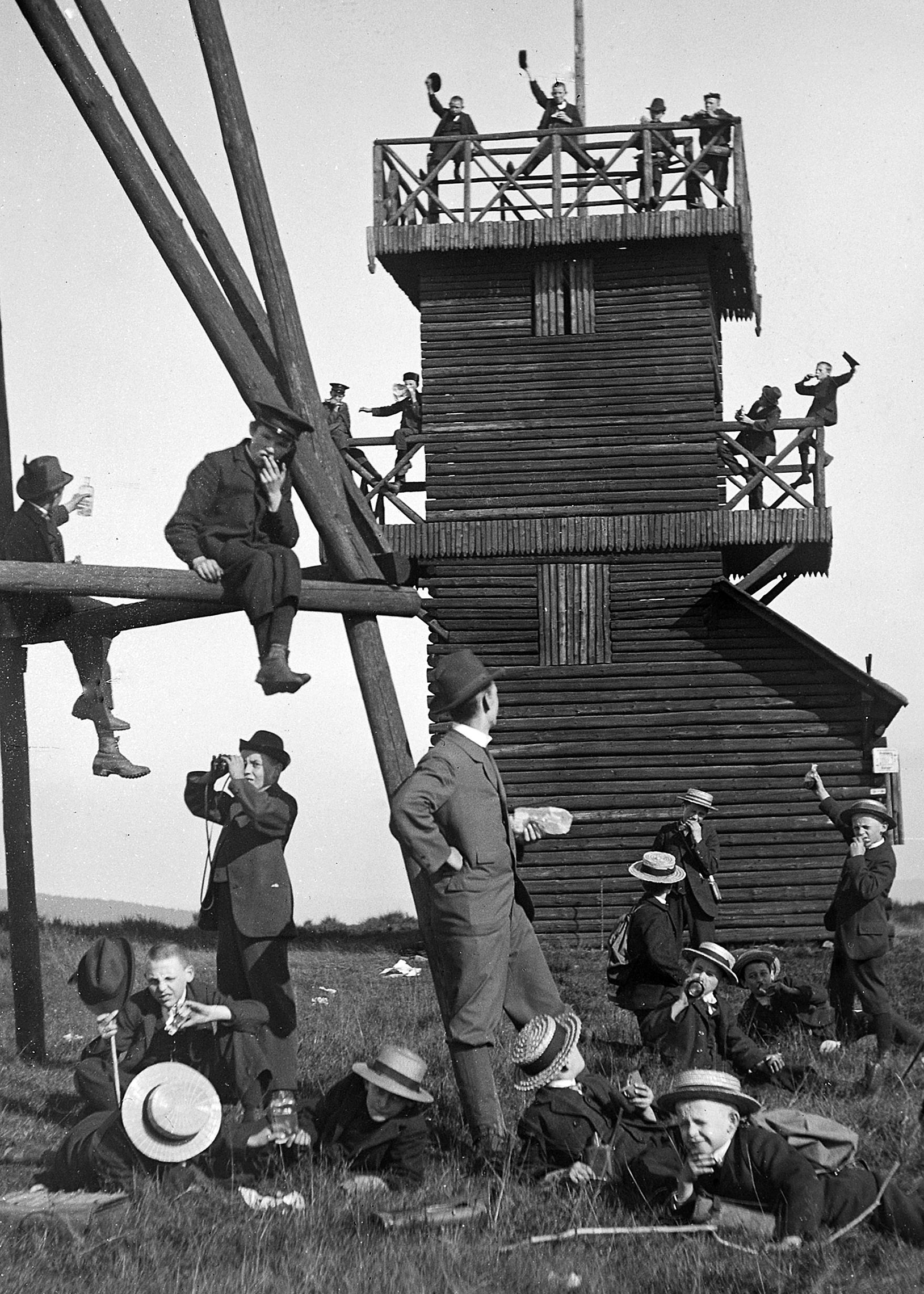
With increasing industrialization, more and more people worked in factories and craft businesses. Labor movements fought for improved working conditions, regulated working hours, and thus also free time. The concept of leisure time became more established in the 20th century thanks to progress and growing prosperity. Weekends and paid vacations were now used for relaxation, excursions, and travel.




With the rise of leisure time, the Sauerland region also gained importance as a tourist destination. Tourists on day trips and holidays brought money to the previously poor region. The local farmers became inventive: residential houses were converted into guesthouses, orchards became picnic areas with deck chairs and catering. Even old surveying towers from the Prussian era were given new purposes – they were converted into observation towers and became popular destinations for hikers. Tourism thus had a lasting impact on the Sauerland region.


The value of leisure time became more important. Vacation regulations and the introduction of Sunday rest in 1891 gave time for recreation. The growth of cities and the rise of industry drew people to nature more often. Observation towers, often located on hills, became popular hiking destinations. Even today, the platforms still have directional arrows pointing to places to discover and notable landmarks in the distance. In the Sauerland region, observation towers were also a popular destination for hiking trips by families, clubs, and other groups in the 1920s