
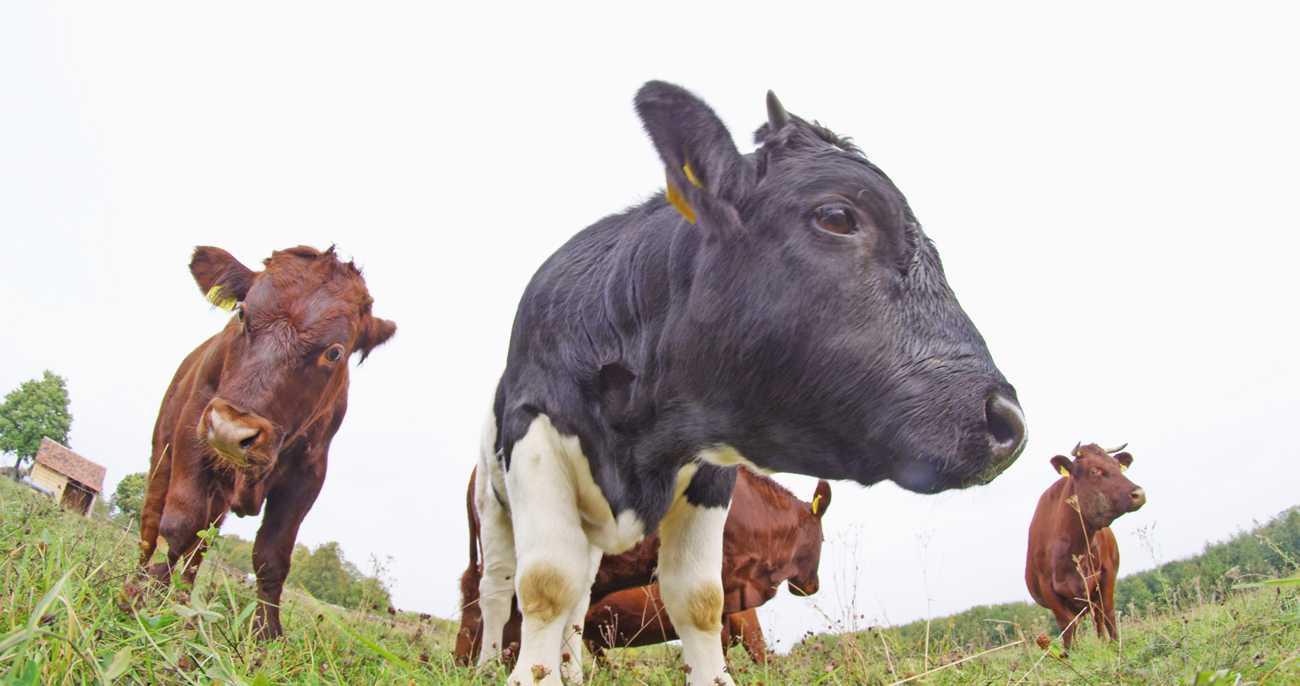
Cattle shaped agriculture in Westphalia for centuries. They provided milk, meat, leather, and helped as working animals for plowing and transport. Depending on the region, different breeds developed, adapted to the climate, soil, and use. With mechanization and modern intensive farming, the diversity of the old breeds declined sharply. Today, two cattle breeds typical of Westphalia are bred at the LWL-Museum Hellerlecht: the Red Highland Cattle (Rotes Höhenvieh) and the German Black Pied Lowland Cattle (Deutsches Schwarzbuntes Niederungsrind).







The German Black Pied Lowland Cattle (Deutsches Schwarzbuntes Niederungsrind) is a traditional, dual-purpose breed with a focus on milk production that has been kept in Westphalia for centuries. Robust and adaptable, it provides plenty of milk and meat. It is one of the roots of the world’s most widespread dairy cattle breed, the Holstein-Friesian. In the past, Black Pied Lowland Cattle shaped farms and regional agriculture. Today, the LWL-Museum Hellerlecht is helping to preserve the breed through its own breeding program.

The Red Highland Cattle (Rotes Höhenvieh) is an old breed from the German low mountain ranges. In Westphalia, it was particularly widespread in the Siegerland region. Robust, undemanding, and long-lived, it provided milk and meat and helped with work on small farms in rough terrain. It is therefore also described as a triple-purpose cattle breed. Today, the Federal Working Group for Red Highland Cattle organizes the preservation of the breed.