
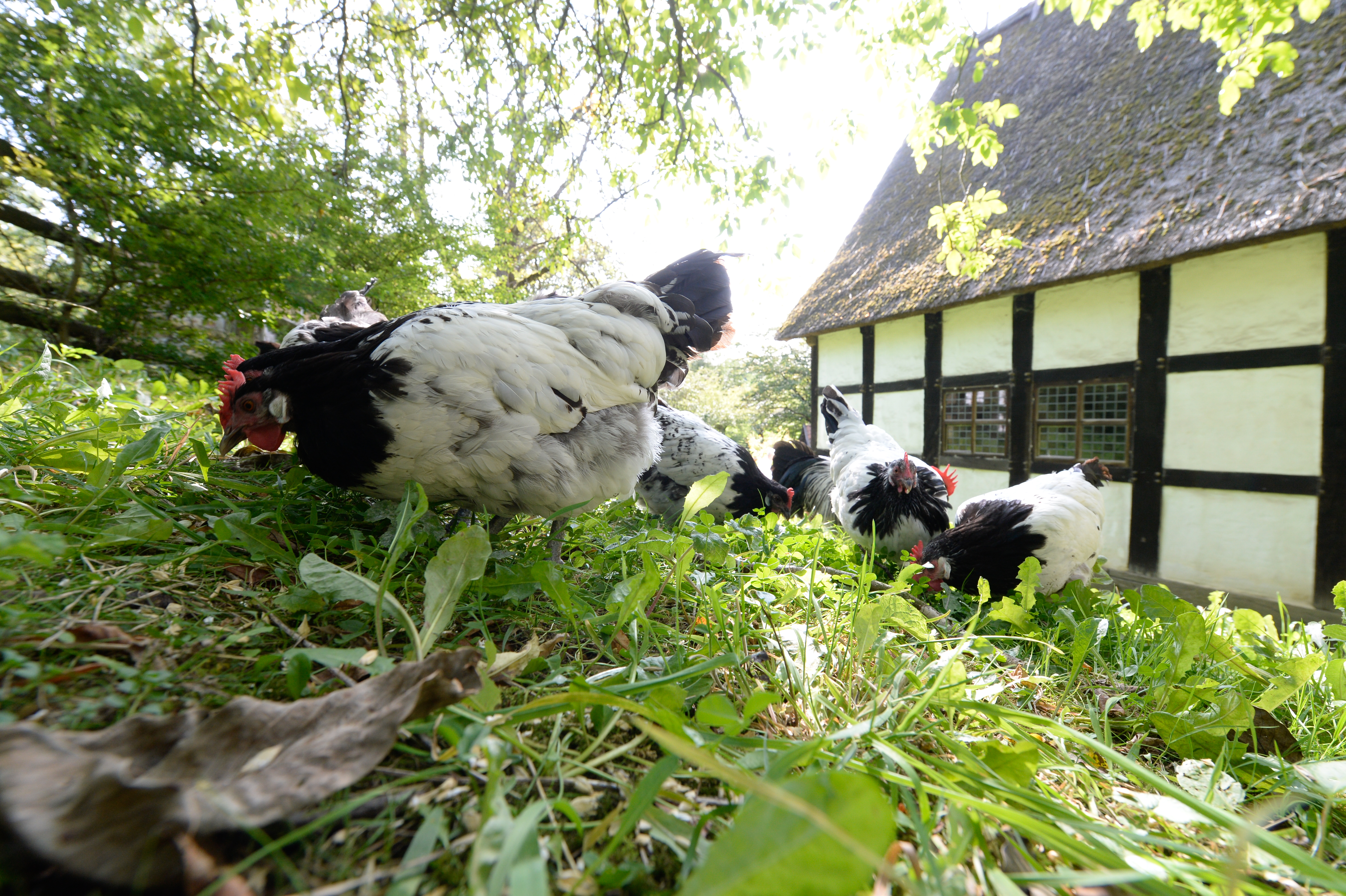
In Westphalia, poultry has been part of everyday farm life for centuries. Chickens, geese, and ducks provided eggs, meat, and feathers. For a long time, keeping poultry was a typical task for women: there were no separate stables, and the animals roamed freely in the yard or garden. Different regional breeds developed depending on the climate and how the animals were used. Poultry played an important role in everyday life and nutrition, was part of self-sufficiency, and visibly shaped rural culture in every household.









The Lakenfeld chicken (Lakenfelder Huhn) is an old breed from Westphalia. It is notable for its white plumage with black neck and tail feathers. Originally, these animals were kept mainly for their eggs, but this robust breed also provided meat. Today, the Lakenfeld chicken is rare, but keeping it preserves old breeding traditions and demonstrates the diversity of historical poultry breeds in Westphalia.
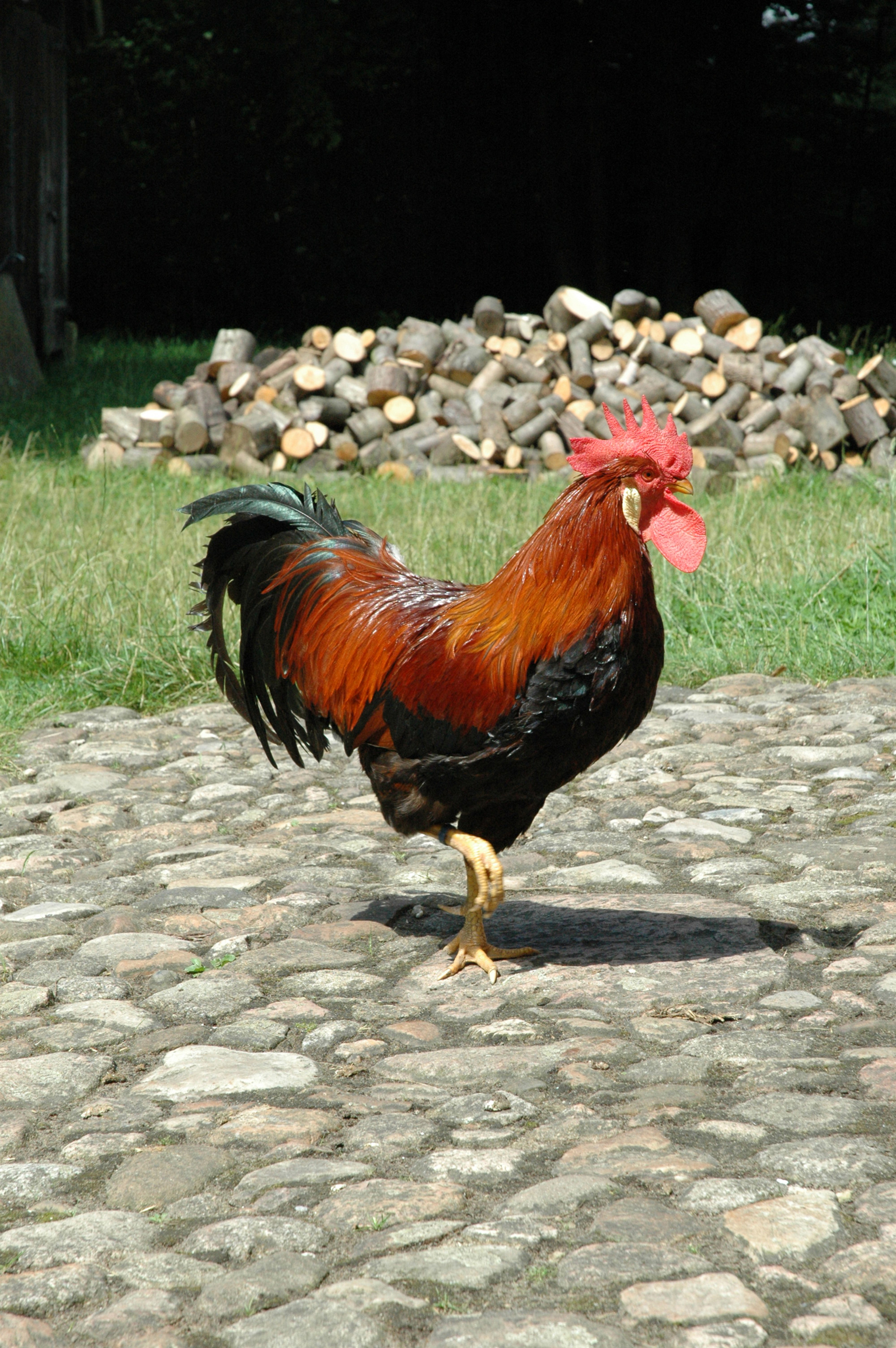
The Bergisch crower (Bergische Kräher) is a historic breed of chicken from the Bergisches Land region, famous for its particularly long crowing sound. According to legend, the ancestors of this breed came from the Balkans in the Middle Ages, where Bosnian and Kosovo crowers are still bred today. Molecular genetic studies confirm its relationship to Southeast European breeds. Formerly prized for its eggs, meat, and attractive appearance, the breed is now rare.

The Westphalian Totleger (Westfälische Totleger) is an old breed of chicken known for its reliable egg production. Its name, literally meaning “dead layer” is a corruption of the old Low German term for “permanent layer”. The breed is robust and undemanding. Today, it is preserved in two color varieties (silver and gold) at the LWL-Museum Hellerlecht.
The Krüper belongs to the group of German land chickens and was mainly bred in Westphalia, the Bergisches Land region, and the surrounding area. The first records of these animals date back to 1500. In Conrad Gessner’s 1555 bird book Avium Natura, the breed was listed as “Kriecher” (crawlers). In the 18th century, they were mainly found in Saxony, East Westphalia, and the Bergisches Land region. With changes in agriculture, conservation breeding declined. At the LWL-Museum Hellerlecht, the Krüper is bred in black and white color varieties.


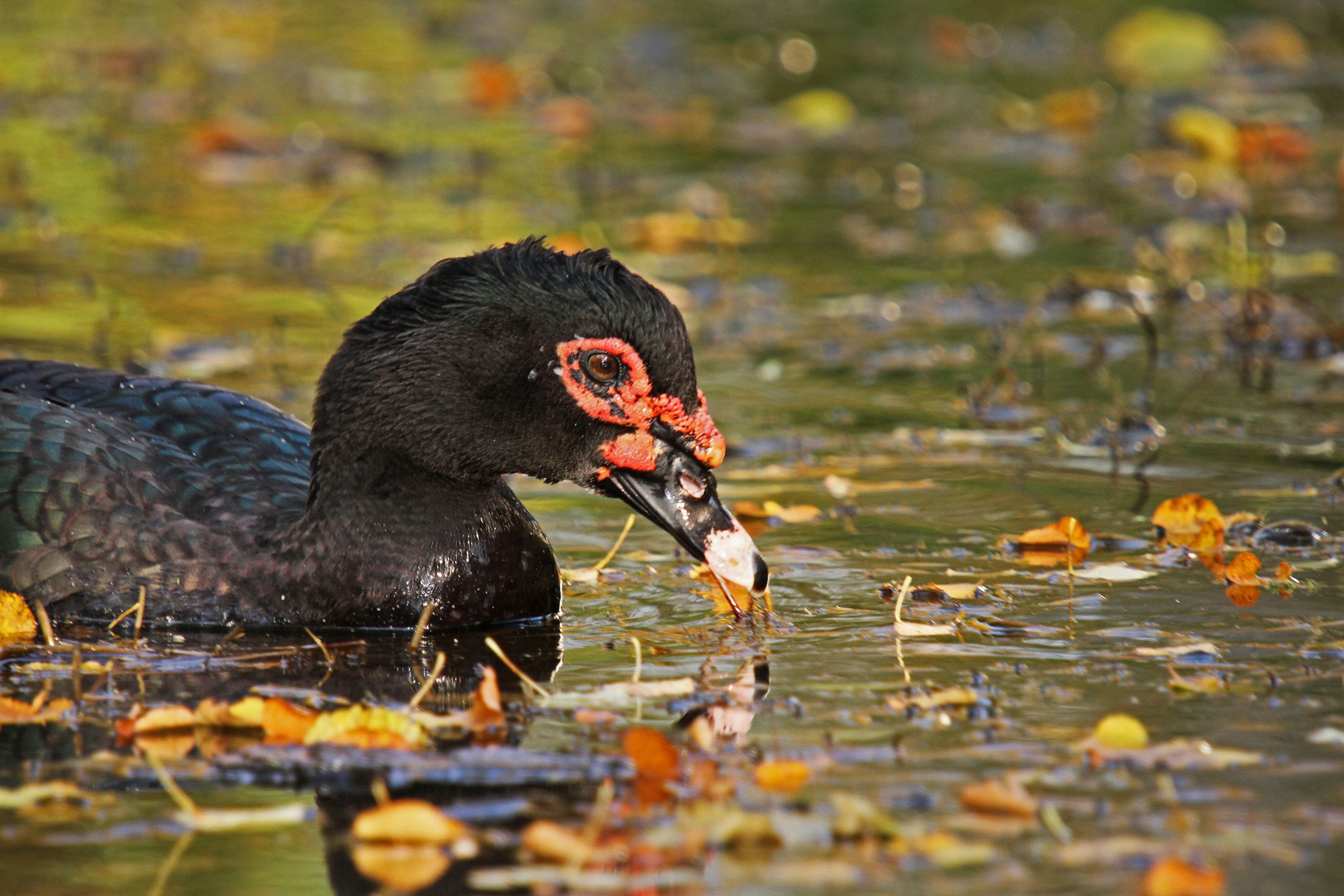
Muscovy ducks (Warzenenten, literally meaning “warty ducks”) are an old breed of farm duck from Westphalia, recognizable by the distinctive warts on their beaks. They were kept for their meat and eggs. Robust and undemanding, this breed was ideal for small farms. Today, warty ducks are rare, and keeping them preserves old breeding traditions and the special diversity of Westphalian poultry breeds.

The Lippe goose (Lippegans) is a breed of goose from Westphalia. In the past, the animals were allowed to graze in the Lippe floodplains in early spring and were thus an important source of income for poor people who did not own cows, for whom the pasture was reserved in summer. Lippe geese provided meat, feathers, and eggs. Today, the breed has become rare. The association Stammbuch Lippegans e. V. is committed to preserving the breed. A few Lippe geese also breed at the LWL-Museum Hellerlecht every year.